Korean café menus look easy until you hit the small print: 샷추가 +1.0, T.O -0.5, ONLY ICE. Then you find highballs next to the lattes. This post decodes a real menu from a café-bar near Seokchon Station in Seoul, with the conversation you’ll need at the counter.

Coffee and highballs under one roof
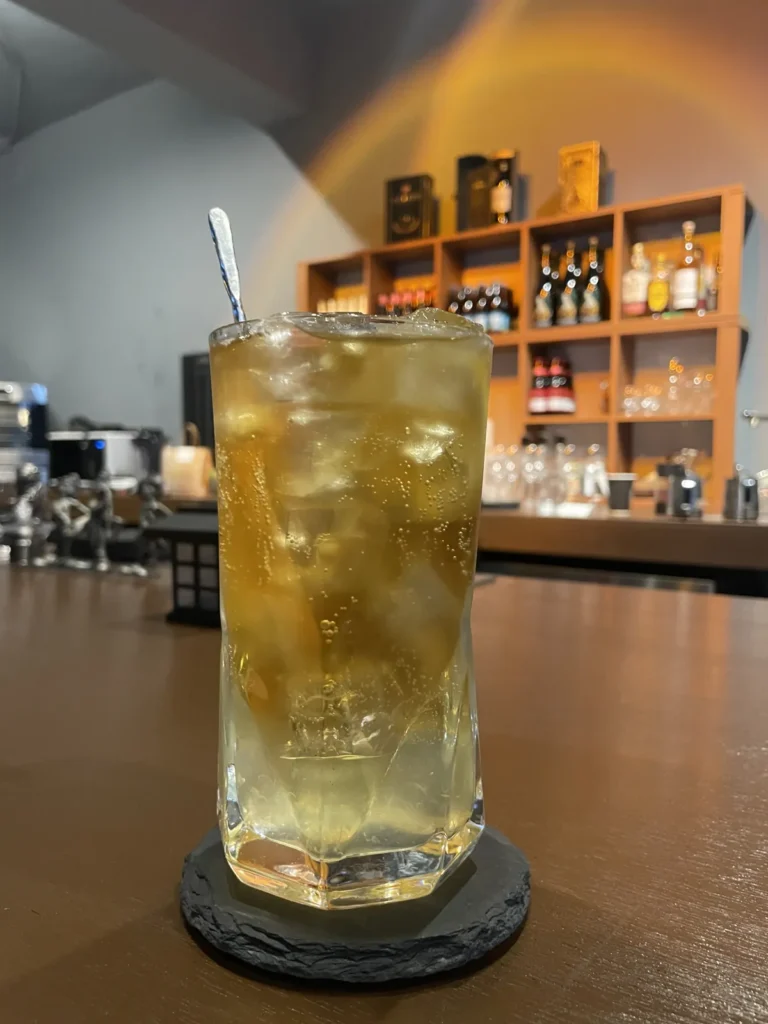
Many newer Korean cafés call themselves a 커피바 (keopi ba), “coffee bar,” and some also serve drinks with alcohol. The menu at this one listed coffee and cake next to a Highball page: 산토리 하이볼 (Suntory highball) and 프라우드 아이리쉬 하이볼 (Proud Irish highball), each ₩7,000.
하이볼 (haibol), whisky with soda over ice, has been hugely popular in Korea in recent years, so don’t be surprised to see it in a café.

Decoding the menu board

Here’s what the small print means:
| Menu text | What it means |
|---|---|
| HOT / ICE | available hot or iced |
| ONLY HOT / ONLY ICE | only one option |
| 디카페인 +0.5 | decaf costs ₩500 more |
| 샷추가 +1.0 | an extra espresso shot costs ₩1,000 |
| T.O -0.5 | take-out is ₩500 cheaper |
| 가격 변동 | price varies (for hand-drip coffee) |
Notice the shorthand: Korean menus often write prices in thousands of won, so +0.5 means +₩500 and +1.0 means +₩1,000. And T.O is “take out.” Some cafés give a small discount if you take your drink to go, so it’s worth asking.
Menu words that are almost English
Most drink names are loanwords, written in Hangul:
- 아메리카노 (amerikano): Americano, the default Korean coffee order
- 카페라떼 (kape latte): café latte
- 아인슈페너 (ainsyupeneo): Einspänner, coffee topped with sweet cream
- 아포카토 (apokato): affogato
- 레몬에이드 (lemon eideu): lemonade. In Korea, 에이드 (ade) usually means fruit syrup topped with sparkling water.
- 크림소다 (keurim soda): cream soda. This café’s signature was 메론크림소다, melon cream soda.
Dessert words

- 케이크 (keikeu): cake. On this menu: 치즈케이크 (cheesecake), 당근케이크 (carrot cake), 초콜렛 케이크 (chocolate cake) and 베리화이트 케이크 (berry white cake).
- 르뱅 쿠키 (reubaeng kuki): Levain-style cookies, thick and gooey
- 휘낭시에 (hwinangsie): financier
- 무화과 (muhwagwa): fig, as in 무화과 밀크 크레이프, fig milk crepe
- 계란빵 (gyeranppang): egg bread, a whole egg baked on a small bread. It’s a classic Korean street snack, and here it was ₩3,500, with 콘치즈 추가 (add corn cheese) for ₩1,000 more.


The conversation at the counter
Staff: 주문하시겠어요? (Jumunhasigesseoyo?) Ready to order?
You: 아이스 아메리카노 하나랑 베리화이트 케이크 하나 주세요. (Aiseu amerikano hana-rang beri-hwaiteu keikeu hana juseyo.) One iced Americano and one berry white cake, please.
Staff: 드시고 가세요? (Deusigo gaseyo?) For here?
You: 네, 먹고 갈게요. (Ne, meokgo galgeyo.) Yes, for here.
Staff: 진동벨 드릴게요. (Jindongbel deurilgeyo.) Here’s your buzzer.
And a few lines that come in handy:
- 샷 추가해 주세요. (Syat chugahae juseyo.): Add an extra shot, please.
- 디카페인으로 주세요. (Dikapein-euro juseyo.): Decaf, please.
- 덜 달게 해 주세요. (Deol dalge hae juseyo.): Less sweet, please. Useful for ades.
- 하이볼은 몇 시부터 돼요? (Haibor-eun myeot si-buteo dwaeyo?): From what time do you serve highballs?
- 와이파이 비밀번호 뭐예요? (Waipai bimilbeonho mwoyeyo?): What’s the Wi-Fi password? Many cafés print it on the menu.
Review events: a very Korean café habit
The menu board also had a REVIEW EVENT: leave a review and get two scoops of ice cream, 아이스크림 2스쿱, and add espresso to turn it into an affogato. Lots of Korean cafés and restaurants run 리뷰 이벤트 like this, usually for a review on a map app or social media. Ask the staff how it works: 리뷰 이벤트 어떻게 해요? (Ribyu ibenteu eotteoke haeyo?)
Menu items and prices are from the café’s menu in November 2026.
Keep exploring