Some Korean bars want to feel modern. Others want to feel like an auntie’s kitchen decades ago. That second kind is often called a 포차 (pocha), short for 포장마차, the old street tents that sold drinks and simple food. Today many indoor pubs keep the name and the mood. The one in these photos is in Bangi-dong, near Jamsil in Songpa-gu, Seoul, and its sign promises to recreate 80년대 방이동, the neighborhood as it was in the 1980s. Here are the words that make a retro pocha make sense, plus one unexpected button on the ordering tablet.
이모: the auntie who runs the show
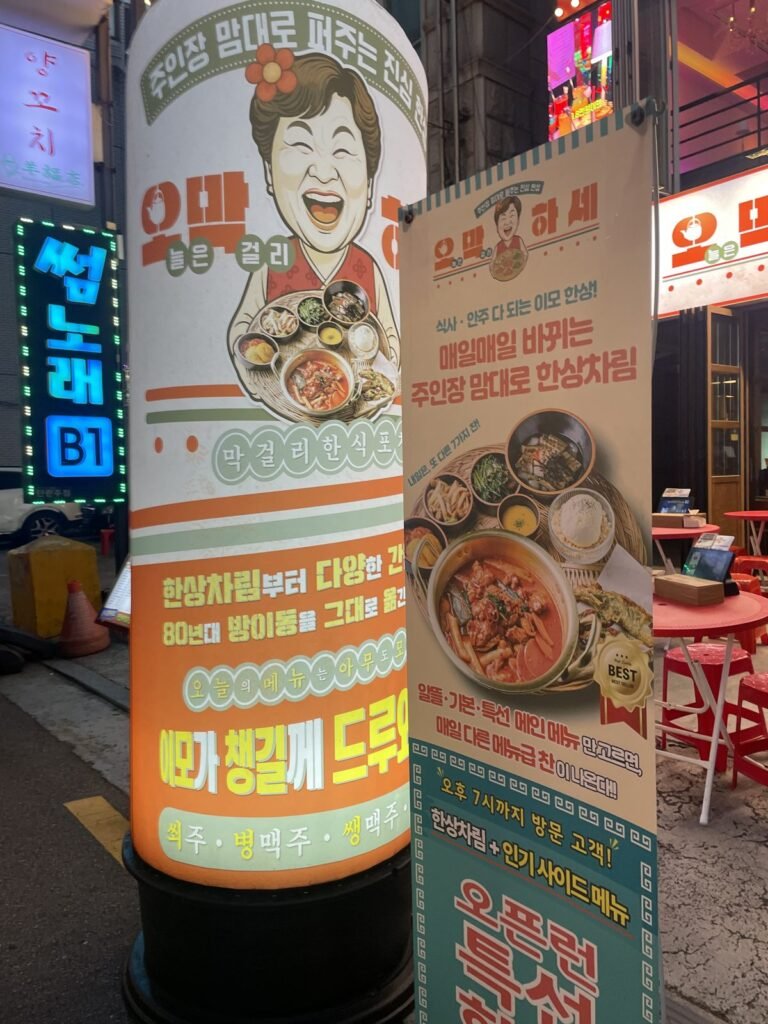
이모 (imo) literally means your mother’s sister. In Korean restaurants and pubs it’s also what customers call the (usually older) woman serving them: 이모, 여기요! (“Auntie, over here!”). Retro pochas love a cartoon 이모 on the sign. It’s selling warmth, big portions and a bit of nostalgia.
- 이모, 여기요! (imo, yeogiyo!): Auntie, over here!
- 저기요! (jeogiyo!): Excuse me! (works for anyone)
- 사장님 (sajangnim): boss / owner, another polite way to call staff.
You may also see 주인장 맘대로 on a menu: “however the owner feels like it.” 맘대로 (from 마음대로) means “as one pleases.” It usually means the owner picks the dishes, and it’s meant to sound a little cheeky.
한상차림: a table set for you
한상차림 (hansang charim) is a whole table of food set at once: a main dish with several side dishes. This sign describes it as 식사·안주 다 되는, good as a meal or as drinking food. 식사 is a meal, 안주 is food you eat with alcohol, and 다 되는 means “both work.”
쐬주, 쌩맥주: spelling it like you say it
Retro signs often list drinks as 쐬주 · 병맥주 · 쌩맥주. The standard spellings are 소주 (soju), 병맥주 (bottled beer) and 생맥주 (draft beer). 쐬주 and 쌩맥주 are playful, exaggerated spellings of how people sometimes say them. They sound old-school and friendly, but don’t copy them into your TOPIK essay.
Ordering on the tablet
Many Korean pubs now have a tablet at each table. The menu tabs work as a mini vocabulary list:
- 음·주류: drinks and alcohol
- 간단안주 / 끼니: light bar snacks / simple meals
- 전: Korean pancakes
- 탕 / 철판볶음: stews / dishes stir-fried on a hot plate
- 치킨 / 튀김: chicken / fried food
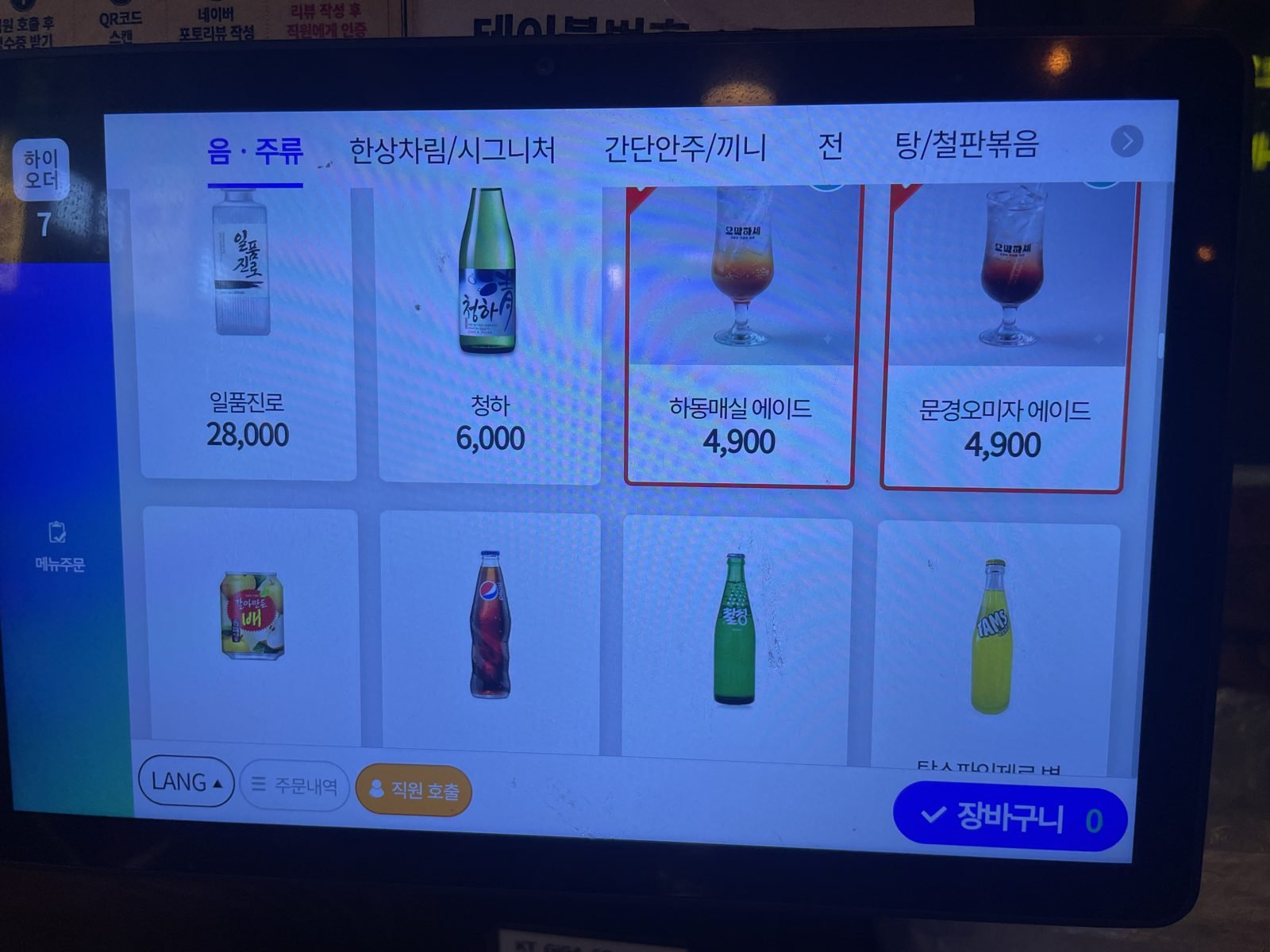
On the drinks page you’ll also see 에이드 (ade), a fruit soda for anyone not drinking alcohol.
The tab you won’t expect: 오늘의 운세
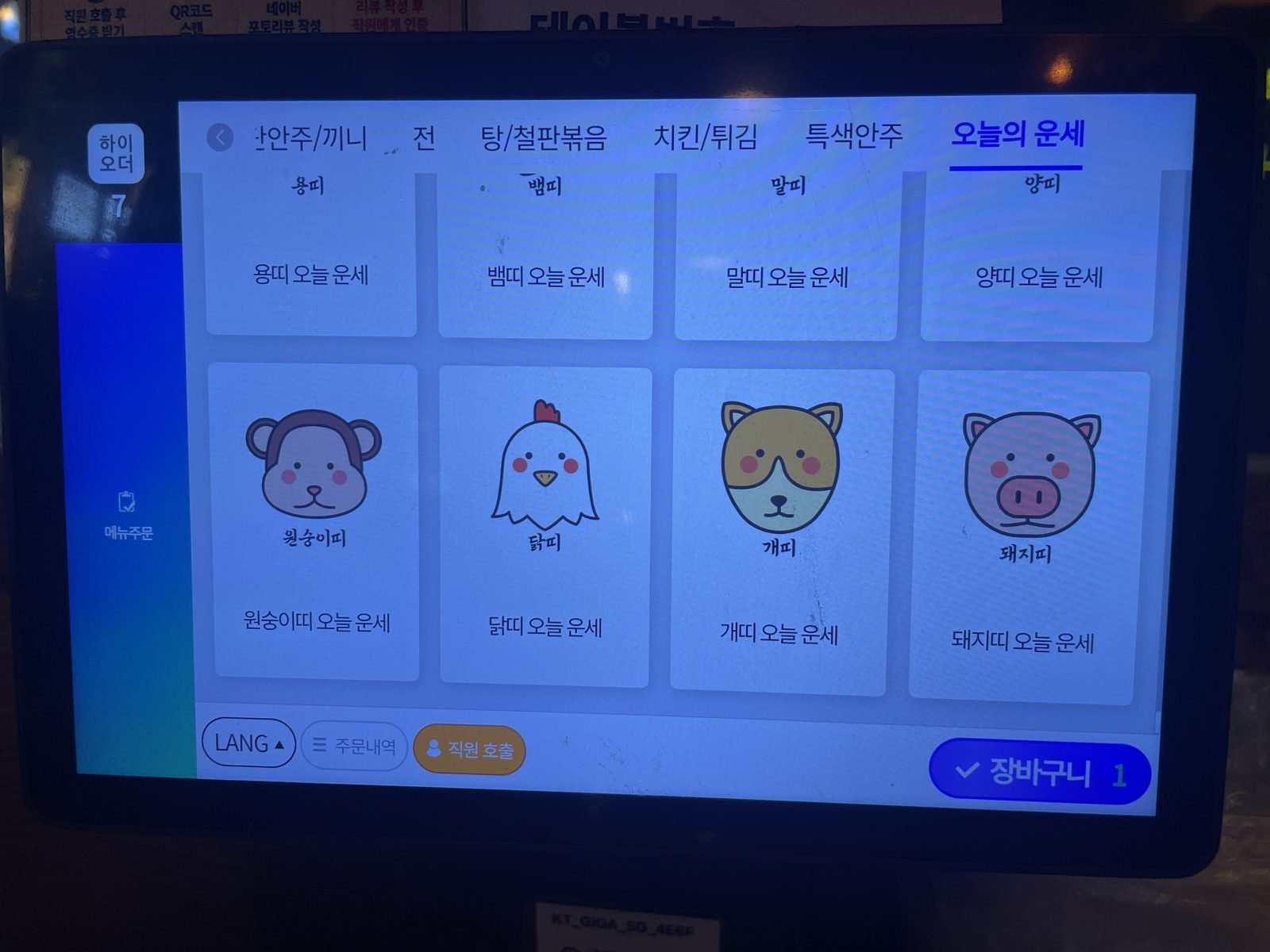
One tablet tab in this photo is 오늘의 운세 (oneurui unse), “today’s fortune.” Tap it and you get the animals of the Korean zodiac, each with a button for that sign’s fortune. The word for your zodiac animal is 띠 (tti):
- 쥐띠 rat, 소띠 ox, 호랑이띠 tiger, 토끼띠 rabbit
- 용띠 dragon, 뱀띠 snake, 말띠 horse, 양띠 sheep
- 원숭이띠 monkey, 닭띠 rooster, 개띠 dog, 돼지띠 pig
Asking 무슨 띠예요? (museun tti-yeyo?), “what’s your zodiac animal?”, is a common way to work out someone’s age without asking directly.
안주 on the table
Pocha food is made to go with drinks. In this photo it’s chicken in a red sauce, topped with green onion and sliced onion.

Phrases for a retro pocha
- 막걸리 한 병 주세요 (makgeolli han byeong juseyo): one bottle of makgeolli, please.
- 오늘 한상차림은 뭐 나와요? (oneul hansang charim-eun mwo nawayo?): what’s on today’s set table?
- 안주 뭐가 맛있어요? (anju mwoga masisseoyo?): which bar dish is good?
- 무슨 띠예요? (museun tti-yeyo?): what’s your zodiac animal?
Related reading on 4pm World