In English, you have “drinks and snacks.” In Korean, there’s a single word for the food you eat while drinking, and Koreans take it seriously:
안주 (anju) — food that goes with alcohol
Not a side dish. Not a snack. 안주. A good drink without 안주 feels a bit incomplete to many Koreans, and some will tell you, only half joking, that you choose the 안주 first and the drink second.
And you don’t need a bar to experience it. The convenience store, 편의점 (pyeonuijeom), is full of it. All the photos here are mine, from a CU convenience store in Seoul in October 2026.
A quick note: in Korea, alcohol can’t be sold to anyone under 19, and convenience stores check ID. If you’re of age, enjoy responsibly. If you’re not, the snacks in this post are still excellent with a soda.
The beer fridge: read the tags first
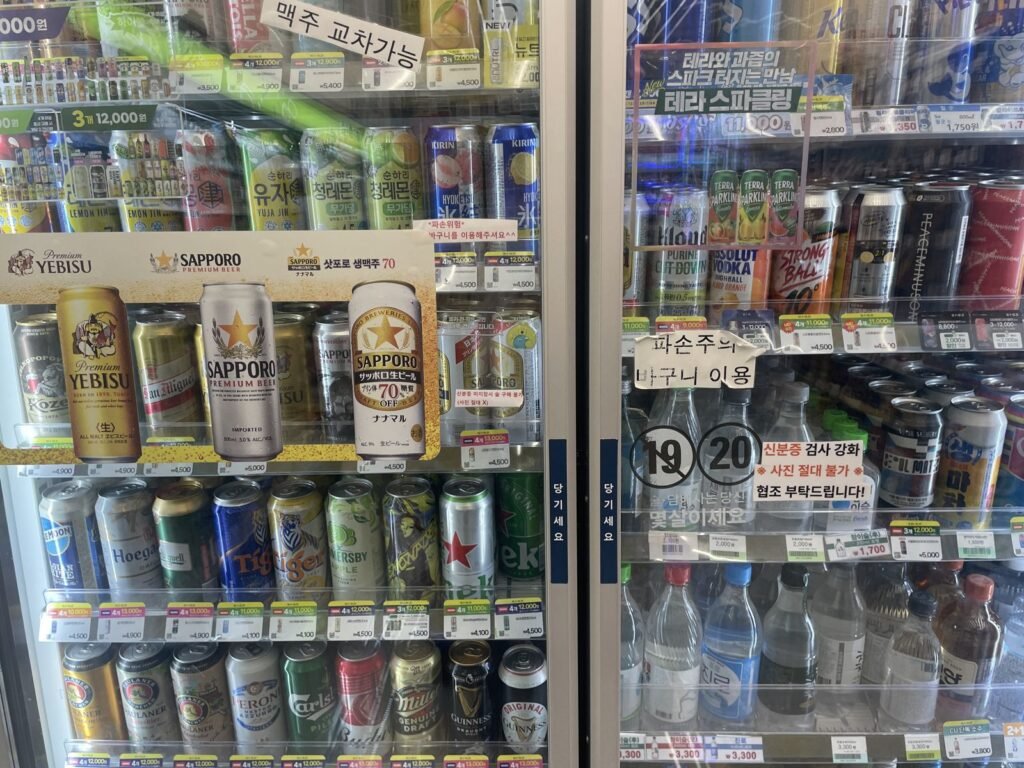
Three signs on this fridge are worth reading:
1. 맥주 교차가능 (maekju gyocha ganeung) — “beer: mix and match.” 맥주 (maekju) is beer, and 교차 (gyocha) means crossing. It means the multi-can deal works across different brands, so you don’t have to buy four of the same.
2. 4캔 12,000원 (ne can man-icheon won) — “4 cans for 12,000 won.” You’ll see prices like this on the tags. 캔 (can) is just “can.” (Prices change, so read the tag in front of you, not the one in my photo.)
3. 파손주의, 바구니 이용 (pason juui, baguni iyong) — “Fragile, please use a basket.” Fair warning for anyone attempting to carry six cans and a bag of chips in two hands.
There’s also an ID notice on the fridge door: 신분증 검사 강화 — “stricter ID checks.” Have your actual ID ready.
Useful phrase: 이거 4캔에 만 이천 원이에요? (igeo ne can-e man icheon wonieyo?) — “Is this 4 cans for 12,000 won?”
The classic 안주: dried seafood
Here’s where foreign visitors usually raise an eyebrow. One of the most classic beer 안주 in Korea is dried seafood.

What you’re looking at:
- 오징어 (ojingeo) — squid. Dried squid is the king of beer snacks. You’ll see it shredded, in sticks, or grilled.
- 맥반석 왕오징어구이 — “giant squid grilled on maekbanseok stone.” 구이 (gui) means grilled.
- 마른멸치 (mareun myeolchi) — dried anchovies. Eaten whole, often with a gochujang dip. Yes, the heads too.
- 한치구이 (hanchi gui) — grilled hanchi, a type of small squid.
- 꾸이맨 (kkuimaen) — a seasoned dried fish snack whose name plays on 구이 (gui), grilled.
Some packs in my photo even carry a little 안주 label, just in case you weren’t sure what they were for.
Nuts with a sense of humor

Flavored nuts are a lighter 안주, and Korean flavors are creative. The words you’ll spot on these packs:
- 허니버터 (honey butter) — honey butter, one of Korea’s most famous snack flavors
- 와사비 (wasabi) — wasabi
- 땅콩 (ttangkong) — peanuts
- 아몬드 (almond) — almonds
Notice how many of these are 2+1 deals. (If 1+1 and 2+1 are new to you, my convenience store survival guide explains how they work.)
The sausage rack

Snack sausages are another everyday 안주. You’ll see:
- 소시지 (sausage) — sausage
- 후랑크 (frank) — frankfurter
- 꼬치 (kkochi) — skewer
- 직화구이 (jikhwa gui) — flame-grilled

And of course, chips
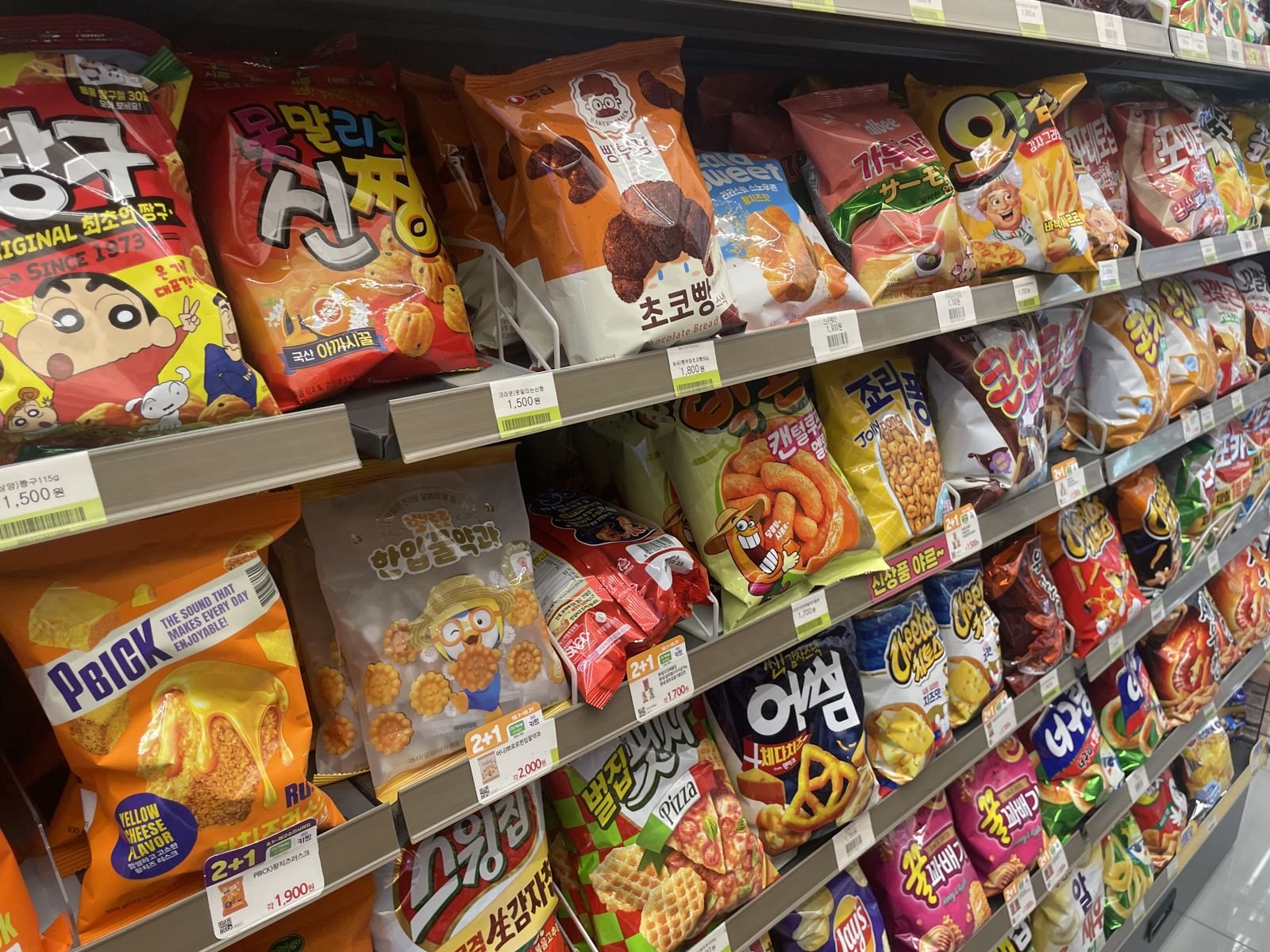
Chips are called 과자 (gwaja) in Korean — a word that covers chips, crackers and cookies alike. “Snack” in general is 간식 (gansik).
Words you’ll hear around a drink
| Word | Romanization | Meaning |
|---|---|---|
| 안주 | anju | Food eaten with alcohol |
| 맥주 | maekju | Beer |
| 치맥 | chimaek | Chicken + beer (치킨 + 맥주) |
| 건배 | geonbae | Cheers! |
| 한잔해요 | hanjanhaeyo | Let’s have a drink |
치맥 (chimaek) is one of those Korean words that’s become famous abroad: fried chicken and beer, the classic combination. And 한잔하다 — “to have a drink” — appears in my guide to how Koreans invite you for coffee, where context decides whether the “one cup” is coffee or something stronger.
A tiny conversation to practice
Friend: 안주 뭐 살까요?
anju mwo salkkayo? — What 안주 should we get?You: 오징어 어때요? 아니면 허니버터 아몬드?
ojingeo eottaeyo? animyeon honey butter almond? — How about squid? Or honey butter almonds?Friend: 둘 다 사요. 2+1이에요!
dul da sayo. two plus one-ieyo! — Let’s buy both. It’s 2+1!You: 좋아요. 건배!
joayo. geonbae! — Great. Cheers!
둘 다 (dul da) means “both.” It’s the answer to most 안주 debates.
The real lesson
안주 says something lovely about Korean drinking culture: drinking is rarely just about the drink. It’s about sitting together, sharing a plate (or a pack), and talking. Even at a plastic table outside a convenience store, the 안주 turns a drink into a small occasion.
So if you’re of age and in Korea, try it the Korean way once: choose the 안주 first.
Keep exploring